Evolution Football Studio Live: A Deep Dive into Football & Casino
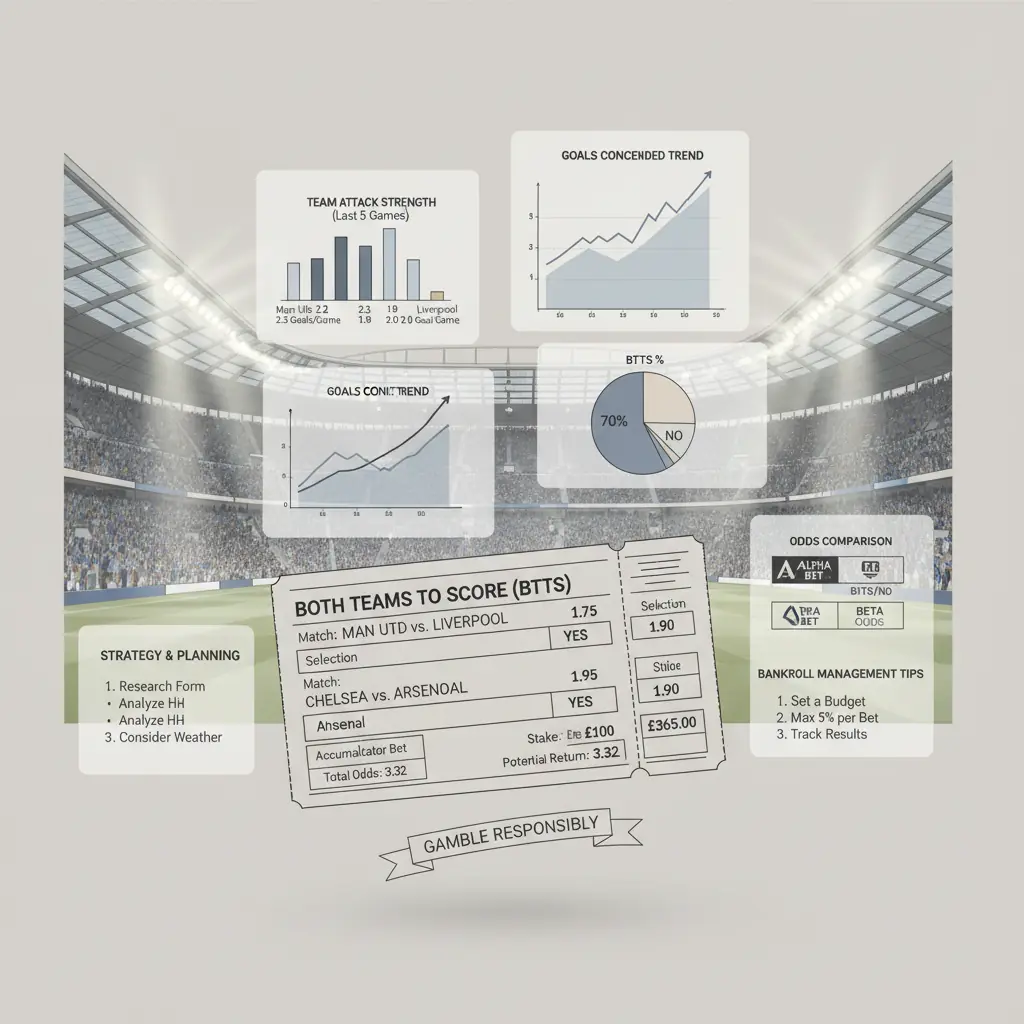
In the captivating world of football betting, the Both Teams to Score (BTTS) market stands out as a favorite among seasoned punters and newcomers alike. The premise is simple: predict whether both teams in a match will find the back of the net. While seemingly straightforward, turning a consistent profit in BTTS betting requires more than just luck. Many bettors fall into common traps, leading to frustrating losses and missed opportunities.
But don’t worry. This guide is designed to equip you with the knowledge and strategies needed to navigate the BTTS landscape successfully. Drawing from years of experience analyzing football matches and understanding betting markets, I’ll reveal insider tips, effective research methods, and crucial factors to consider before placing your bets. Forget guesswork – it’s time to approach BTTS betting with a strategic edge.
Whether you’re looking to refine your existing approach or just starting out, this is your roadmap to unlocking the potential of Both Teams to Score betting. Get ready to transform your betting strategy and increase your chances of winning.
Understanding the Basics of BTTS
BTTS, short for Both Teams To Score, is a popular betting market focusing solely on whether both teams involved in a match will score at least one goal each. It simplifies the game by ignoring the final result – the only thing that matters is if both teams find the back of the net.
BTTS Explained: Yes or No
In a BTTS bet, you have two possible selections: ‘Yes’ and ‘No.’
- BTTS: Yes – This bet wins if both teams score during the regular time of the match (90 minutes plus injury time). For example, a final score of 2-1, 3-1, or 1-1 would all result in a winning ‘Yes’ bet.
- BTTS: No – This bet wins if one or both teams fail to score during the regular time. A final score of 1-0, 0-0, or 3-0 would all result in a winning ‘No’ bet.
The Final Score Doesn’t Matter (Usually)
It’s crucial to understand that the final score is irrelevant when it comes to standard BTTS betting. A 5-1 result is just as good as a 1-1 result for a ‘Yes’ bet. The focus is strictly on whetherboth* teams managed to score at least once.
Extra Time and BTTS
Generally, BTTS bets are settled based on the score at the end of regular time (90 minutes plus injury time). Goals scored during extra time or penalty shootoutsusually* do not count towards the outcome of a standard BTTS bet unless explicitly stated otherwise within the specific bet’s terms and conditions. It is important to consult the rules from the betting site.
BTTS on Betting Sites
You’ll typically find BTTS options listed clearly on betting sites under the main match markets. It’s usually presented as “BTTS – Yes/No” or similar, making it easy to select your desired outcome.
The Allure and Potential Pitfalls of BTTS
The Both Teams to Score (BTTS) market holds undeniable appeal for many bettors. It’s easy to understand: root for goals from both sides, transforming every attack into a moment of heightened anticipation. This simplicity, combined with the promise of thrilling, high-scoring encounters, fuels much of its popularity. People are naturally drawn to the excitement, envisioning matches filled with drama and, of course, winning bets.
However, the path to BTTS success is rarely as straightforward as it seems. The thrill can quickly turn to frustration when a game, seemingly destined for goals, ends in a 0-0 stalemate. I remember one match, a local derby known for its attacking football, that I confidently backed for BTTS. The pre-match hype centered on the teams’ leaky defenses and potent forward lines. Ninety minutes later, I was left dumbfounded by a goalless draw, a stark reminder that football rarely follows a predictable script.
That’s one of the common BTTS risks. The temptation to chase high-scoring games can sometimes overshadow the need for disciplined analysis. It’s easy to be swayed by past results or media narratives, overlooking crucial factors like tactical setups, player form, and even the prevailing weather conditions. Similarly, one-sided games, where one team dominates and prevents the other from scoring, are another pitfall. The psychology of betting plays a significant role here; the desire for entertainment can cloud judgment. Overcoming this requires a conscious effort to move beyond gut feelings and embrace a more data-driven and strategic approach.

Key Factors for Identifying Profitable BTTS Matches
Unlocking the potential of Both Teams to Score (BTTS) betting hinges on a sharp analysis of statistical and situational factors. Spotting the right opportunities requires a deep dive, moving beyond simple win/loss records. Pro bettors know that success comes from understanding the subtle signals hidden within team form, playing style, and key performance indicators.
Expected Goals (xG) represents the quality of chances a team creates, while Expected Goals Against (xGA) reflects the quality of chances they concede. These metrics are vital in assessing a team’s true attacking and defensive capabilities, stripping away the randomness of individual matches. For example, teams consistently generating an xG of over 1.5 per game signal a strong attacking intent. Conversely, an xGA consistently over 1.0 suggests a leaky defense. Put them together, it can be a recipe for goals at both ends.
To refine your BTTS strategy, focus on teams demonstrating consistent offensive output combined with defensive vulnerabilities. Analyze recent form, looking for trends in both scoring and conceding goals. Study tactical approaches, pinpointing teams known for their attacking philosophy or susceptibility to defensive lapses. Scour available football data to find teams whose underlying stats strongly indicate a high likelihood of BTTS outcomes.
Use sites that specialize in football data to get a good overview of the data, and have an edge when looking at BTTS bets.
Analysing Team Statistics
Several key statistics can reveal a team’s BTTS potential. A high goal conversion rate—the percentage of shots that result in goals—indicates an efficient attack. Scrutinize shots on target, as a team consistently peppering the opposition’s goal is more likely to find the net. The rate at which a team attacks also matters; a relentless, high-pressure style often leads to more scoring opportunities, but can also leave them exposed at the back.
Defensive errors are a goldmine for BTTS predictions. Look for teams with a history of individual mistakes leading to goals. Evaluate set-piece vulnerabilities, as a team’s inability to defend corners and free-kicks can be a significant weakness. A team that leaks goals from set plays is a prime candidate for a BTTS bet.
Playing Style and Tactical Set-Up
A team’s playing style heavily influences the likelihood of a BTTS outcome. Teams committed to attacking football, favoring open play and forward movement, naturally create more scoring opportunities – but this often comes at the expense of defensive solidity. Conversely, defensively minded teams, those that “park the bus,” may struggle to score themselves but can still concede due to counter attacks and moments of individual brilliance from the opposition.
High-pressing teams aim to win the ball back in the opponent’s half, leading to fast-paced, end-to-end action and increased goalmouth opportunities. Quantify this style by looking at metrics like possession won in the final third and the number of tackles made in the opposition’s half. These stats reveal a team’s commitment to an aggressive, attacking approach, even without watching the game.
Advanced BTTS Strategies & Techniques
Once acquainted with the fundamental BTTS strategy, bettors can explore more advanced techniques to potentially amplify returns and navigate the inherent risks involved. These strategies often involve combining BTTS with other markets or leveraging the dynamism of in-play betting.
BTTS Combination Bets
One popular approach is to combine BTTS with another market, such as Over 2.5 Goals (Both Teams to Score and Over 2.5 Goals). This means that for the bet to win, both teams must score, and the total number of goals scored in the match must exceed two.
The advantage is that the odds are typically higher than betting on either market individually. The downside is an increased level of risk; both conditions must be met for the bet to be successful. Careful analysis of team statistics, form, and head-to-head records is crucial when considering such combination bets. For instance, focusing on teams with strong attacking records but also defensive vulnerabilities can be a profitable avenue.
In-Play BTTS: Capitalizing on Game Dynamics
In-play BTTS betting, also known as live betting, introduces another dimension to the strategy. This involves placing BTTS bets after the match has already started. This allows bettors to observe the game’s unfolding dynamics – team momentum, tactical changes, and even individual player performances – before committing their stake.
The key to success in in-play BTTS lies in identifying key moments. For example, if one team scores early, the odds on BTTS may lengthen, presenting an opportunity if the other team is known for its attacking prowess. Watching the game is paramount; statistics alone cannot capture the nuances of a live match. Recognizing shifts in momentum, signs of fatigue, or tactical adjustments can provide valuable insights for making informed in-play BTTS decisions. However, be mindful of the time delay when placing live bets to avoid missing favorable odds movements.
When to Avoid a BTTS Bet (Even When it Looks Good)
Sometimes, the allure of a Both Teams to Score (BTTS) bet is strong. The stats look promising, the teams involved have a reputation for attacking football, and everything points towards a goal-filled encounter. However, even in these seemingly ideal scenarios, exercising caution and avoiding the BTTS bet can be a smart move. BTTS risk management is a key skill for any successful football bettor to learn.
One major red flag is when low-scoring teams are involved. While every team is capable of scoring, some consistently struggle to find the net. Check the recent form and historical data of both teams. If either side is known for grinding out 1-0 victories or frequently being involved in goalless draws, it might be wise to reconsider your BTTS bet. Don’t fall into avoiding BTTS traps just because they had one high-scoring game last time.
Another situation to avoid is crucial matches where defensive tactics are likely to take precedence. Think of a cup final, a relegation decider, or a top-of-the-table clash late in the season. In such games, the pressure is immense, and managers often prioritize avoiding defeat over all-out attack. One team might be happy to sit back and ‘park the bus,’ stifling the opposition and reducing the likelihood of both teams scoring. A local derby where both managers focus solely on not losing might seem likely to have goals, but is often tight and tense.
Finally, always pay close attention to injury news. If a key attacking player is ruled out for one or both teams, the goal-scoring potential of those sides diminishes significantly. Even if the teams have a history of BTTS matches, the absence of a prolific striker or creative midfielder can drastically alter the outcome. Therefore BTTS risk management is key. If in doubt, it may be best to skip the BTTS bet altogether and look for a more reliable opportunity.

Maximizing Your BTTS Profits: Bankroll Management and Staking Plans
Betting on Both Teams to Score (BTTS) can be an exciting and potentially profitable venture. However, like any form of gambling, consistent success hinges on implementing sound bankroll management and employing effective staking plans. Without these crucial elements, even the most astute BTTS predictions can be undermined by poor financial decisions.
Bankroll Management: Playing the Long Game
Bankroll management is simply the practice of responsibly managing the funds you’ve allocated for betting. It’s about understanding that losses are inevitable and having strategies in place to weather those setbacks without depleting your entire betting pool. A fundamental principle is to only bet what you can afford to lose. Your betting bankroll should be entirely separate from essential funds needed for living expenses.
One common approach is to divide your bankroll into units. The size of each unit depends on your risk tolerance, but a conservative approach might be to make each unit 1-2% of your total bankroll. This ensures that even a string of losing bets won’t significantly impact your overall financial position.
Staking Plans: Strategic Betting for Consistent Growth
A staking plan dictates how much you bet on each individual wager. It’s a crucial component of bankroll management, helping to control risk and maximize potential returns. A simple, yet effective, staking plan is level staking, where you bet the same amount (one unit) on every selection. This approach offers stability and protects against significant losses. Another option is proportional staking, where the stake is proportional to the confidence in the bet.
Responsible Betting: A Cornerstone of Success
Ultimately, responsible betting is paramount. It involves setting limits for both time and money spent on betting, and sticking to those limits regardless of wins or losses. It’s about recognizing when betting stops being enjoyable and starts becoming a problem. Many resources are available to assist with responsible gambling, and it’s crucial to utilize them if needed. By combining astute BTTS analysis with disciplined bankroll management and responsible betting practices, you significantly increase your chances of long-term profitability.
Conclusion
Navigating the world of BTTS betting requires a blend of strategic insight and diligent preparation. From meticulously researching team statistics and understanding influencing factors to implementing a robust bankroll management system, the path to profitability demands commitment. Remember, knowledge is power; the more you understand the nuances of football and betting, the better equipped you will be to make informed decisions.
This guide has equipped you with actionable strategies and expert insights to elevate your BTTS betting game. It’s time to apply these strategies, analyze the data, and manage your bankroll wisely. Your journey to successful BTTS betting starts now. For more expert football betting advice and winning strategies, make sure to follow for future updates!